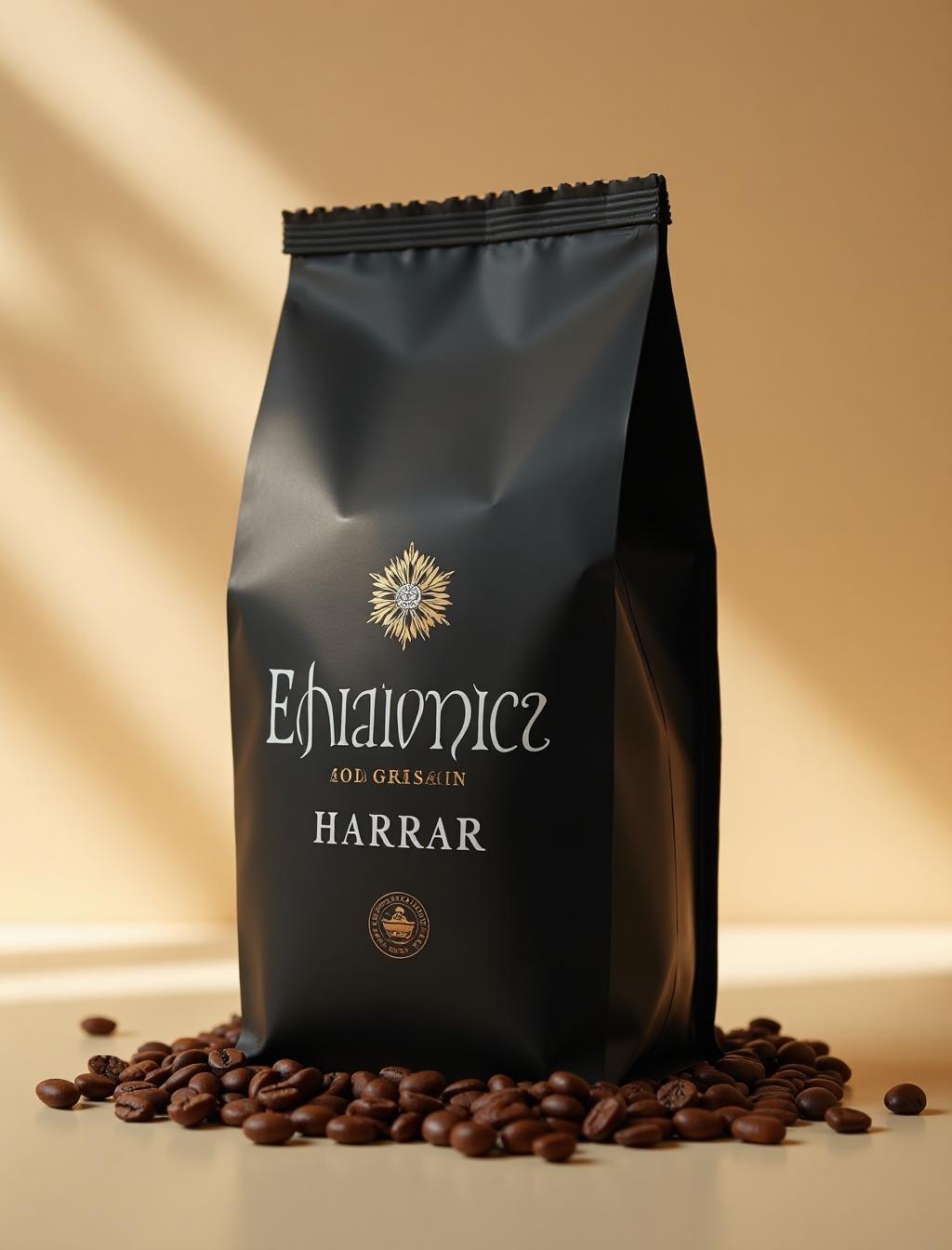
Location
Eastern Ethiopia, Oromia
Altitude
1,500 – 2,100 masl
Varieties
Heirloom Ethiopian
Processing
Natural (Dry-Processed)
The Historic Legacy of Harrar Coffee
Harrar (also spelled Harar) is one of Ethiopia's oldest coffee-trading regions, with roots stretching back centuries. The ancient walled city of Harar served as a major coffee trading hub connecting Ethiopia to Yemen and the broader Arab world.
Unlike the washed coffees of southern Ethiopia, Harrar has maintained its traditional dry-processing methods. Cherries are dried whole on raised beds or patios, allowing natural fermentation to impart the region's signature wild, fruity character.
Harrar Flavour Profile
Natural Harrar Characteristics
- • Intense blueberry and blackberry notes
- • Wine-like, fermented fruit complexity
- • Jammy sweetness with dried fruit undertones
- • Full, heavy body
- • Earthy, spicy finish (cardamom, cinnamon)
- • Low to moderate acidity
Harrar coffees are unmistakable on the cupping table. Their bold, almost overwhelming fruit character divides opinion—some find them complex and fascinating, while others prefer the cleaner profiles of washed Ethiopians. Understanding this polarising nature helps roasters position Harrar appropriately for their customer base.
Harrar Grades and Quality
Harrar coffees are graded based on bean size and defect count. The main grades you'll encounter:
Harrar Longberry
Large, elongated beans representing the top grade. More uniform appearance and often cleaner cup with pronounced fruit notes.
Harrar Shortberry
Smaller, rounder beans. Can still deliver excellent cup quality but with more variation in appearance.
Harrar Mocha
The smallest grade, named for its resemblance to Yemeni Mocha beans. Intensely flavoured but highly variable in quality.
Best Uses for Harrar Coffee
Harrar's bold character lends itself to specific applications:
- Moka pot and stovetop espresso: Traditional Italian-style brewing complements Harrar's intensity and body.
- Espresso blends: Small percentages (10-20%) add fruit complexity and body to espresso blends without overwhelming other components.
- Dark roast single origin: Harrar handles darker roasts well, with its fruit character persisting even into second crack development.
- Cold brew: Extended extraction brings out Harrar's sweet, jammy qualities while softening any rough edges.
Sourcing Harrar Coffee
Harrar presents unique sourcing considerations compared to other Ethiopian origins:
- Quality variation: Natural processing and traditional methods mean more lot-to-lot variation. Sample multiple lots before committing.
- Defect tolerance: Harrar often shows more physical defects than washed coffees. Focus on cup quality over appearance grades.
- Ferment risk: Check for over-fermentation, which can tip from "complex fruit" into "vinegary" territory.
- Storage sensitivity: Natural processed coffees age differently; plan your inventory accordingly.